
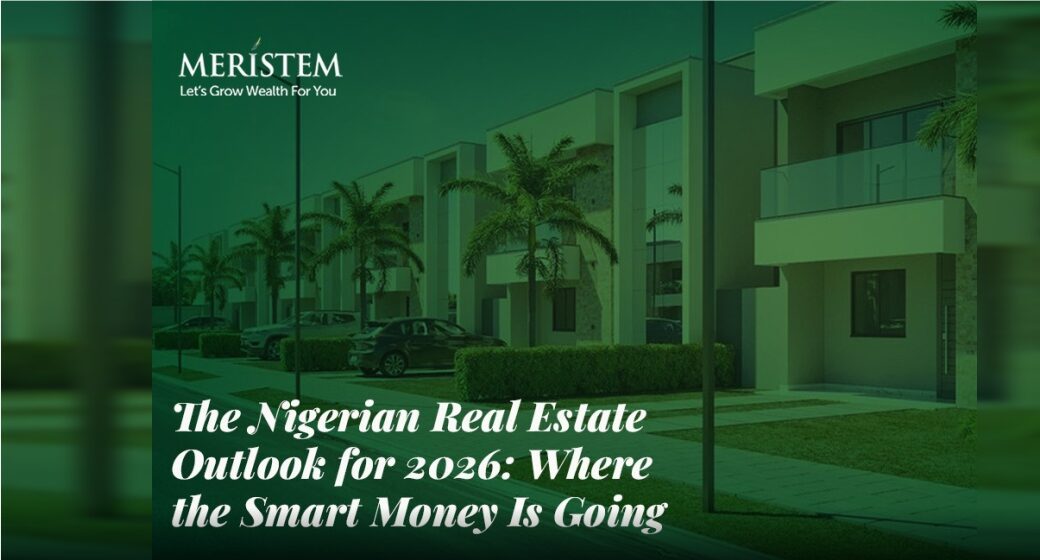
Meristem released a report on Nigeria’s real estate market, which is entering 2026 at a turning point, shaped by high inflation, elevated interest rates, FX volatility, and sharply rising construction costs. These pressures have shifted investor focus away from speculative land banking toward disciplined, income-driven, and data-led property investments. Rental demand remains resilient, especially in Lagos and Abuja, supported by urban migration and a persistent housing deficit, while higher financing and construction costs are forcing greater emphasis on project feasibility and realistic pricing.
As we enter 2026, Nigeria’s real estate market stands at a critical inflection point. The events of 2025-persistent inflation, elevated interest rates, FX volatility, and rising construction costs- have fundamentally reshaped how investors should approach property. The era of speculative buying and passive land holding is giving way to disciplined, data-driven, and income-focused real estate investing.
Key Market Observations for 2026
- Rental demand remains strong, particularly in Lagos and Abuja, driven by urban migration and limited housing supply.
- Construction costs have increased by over 30-40% in some segments, making feasibility and cost control critical.
- Financing costs are high, meaning only projects with strong fundamentals and realistic pricing will succeed
- Investors are increasingly prioritising cash flow stability over speculative capital appreciation.
Where Opportunities Still Exist
In 2026, opportunities will be concentrated in:
- Well-located residential developments with clear affordability targets
- Income-producing commercial and mixed-use assets.
- Structured real estate investments with professional management
- Joint venture developments that optimise land and capital efficiently
What This Means for Investors
Real estate remains one of Nigeria’s strongest long-term asset classes, but selection, structure. and execution will determine outcomes.
Smart investors will not ask “where is cheap?” but rather “where is sustainable, rentable. and defensible?”
