

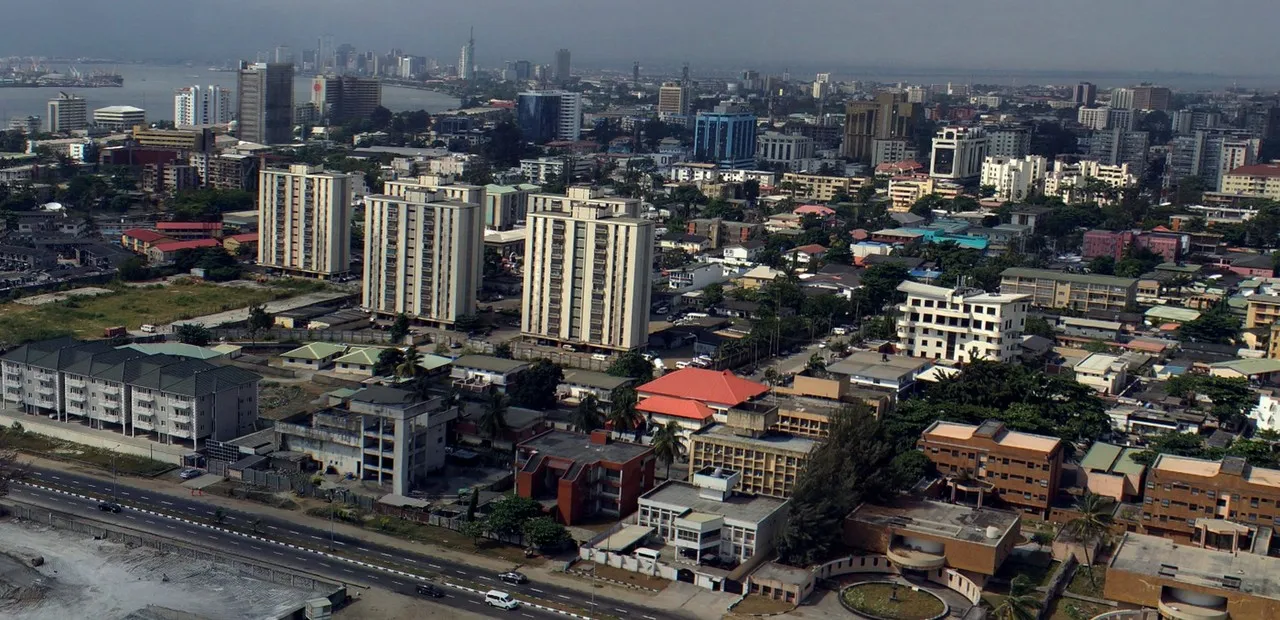
Hundreds of landlords and residents in a Lagos community in Ojo area on Thursday staged a protest against an alleged plan by the Lagos Metropolitan Area Transport Authority, LAMATA, and associated agencies to demolish over 300 homes for a rail project, warning that the move could render thousands homeless.
The protesters, who marched through parts of the community, carried placards with inscriptions such as “Please Governor Sanwo-Olu, save 354 homes, churches, hospital, hotels and the lives of over 30,594 residents,” “LAMATA, don’t render us homeless,” “Governor Sanwo-Olu, save our homes and lives,” and “We say no to demolition.”
The aggrieved residents, who described the move as unjust and in violation of due process, accused authorities of intimidation, harassment and disregard for a subsisting court order halting the proposed demolition.
Speaking on behalf of the community, the Coordinator of the group, Engr. Iniobong Offiong, said the affected area comprises four estates with an estimated population of about 20,000 people living in approximately 315 homes developed over four decades.
He alleged that officials, accompanied by armed security operatives, invaded the community in May 2025, forcing residents to fill forms under the pretext of a census exercise, only to later announce that the properties had been acquired for demolition.
According to him, the officials claimed the acquisition was in overriding public interest for the Lagos rail project, specifically for a proposed train depot.
Offiong, however, argued that the justification was questionable, noting that a large expanse of land reportedly acquired for the same purpose during a previous administration remains unused.
He said: “We were told our homes would be demolished within four months. But there is already a vast, fenced-off land designated for the rail depot which has remained undeveloped. There is no justification for extending into our fully built and occupied community.”
The coordinator further disclosed that the community had petitioned the Lagos State House of Assembly, the governor, the police and relevant ministries, but received no concrete response, prompting them to seek legal redress.
He said the residents secured an interim injunction from a Federal High Court restraining further action on the planned demolition, but alleged that the order has been ignored.
“Despite the court order, officials and their agents continue to enter the community under armed guard, drilling and collecting data on private properties. This is a clear disregard for the rule of law,” he said.
Offiong also alleged attempts to weaken resistance within the community, claiming that some tenants were allegedly offered money to vacate their apartments, while efforts were made to disconnect electricity supply to the area.
A homeowner, who identified himself simply as a retiree nearing 75 years, described the situation as distressing, saying many residents have nowhere else to go.
“This is my only home. Even if compensation is offered, it must be adequate enough to secure a similar property in Lagos. Anything short of that is unjust and unacceptable,” he said.
He likened the proposed compensation to “taking a loaf of bread from someone and offering a token in return,” insisting it would amount to economic displacement.
Residents also raised concerns over the humanitarian impact of the demolition, noting that the community houses elderly persons, widows and children who could be rendered homeless.
They claimed that at least one resident had reportedly died after being unable to cope with the shock of the development.
The community further alleged that physical planning authorities who visited the area found it to be largely occupied, contrary to claims that the land was mostly vacant.
According to them, a proposed mediation meeting involving relevant agencies and the community was not honoured by representatives of the transport authority.
The protesters called on the state government to halt the planned demolition and revert to the original master plan for the rail project, which they said would not require displacement of residents.
They also appealed to the media and civil society organisations to amplify their plight and intervene to prevent what they described as an unlawful takeover of their property.
